


Between Borders and Blankets: The Hidden Realities of Homeless EU Citizens
By Zoé Perko
Introduction
It’s 7:53 a.m. I hurry through the endless drizzle of a Brussels winter, weaving my way toward the subway station. Businesspeople stride across the crowded sidewalks, already absorbed in the day’s upcoming tasks. Within minutes, I hear snippets of conversations in half a dozen European languages, a reminder of the mosaic of people that make up this city.
I bound down the metro stairs, two steps at a time, hoping to catch the next train. I’m on my way to an interview at one of the EU’s renowned institutions to conduct an interview on conflicts around free movement in the EU, and I don’t want to be late.
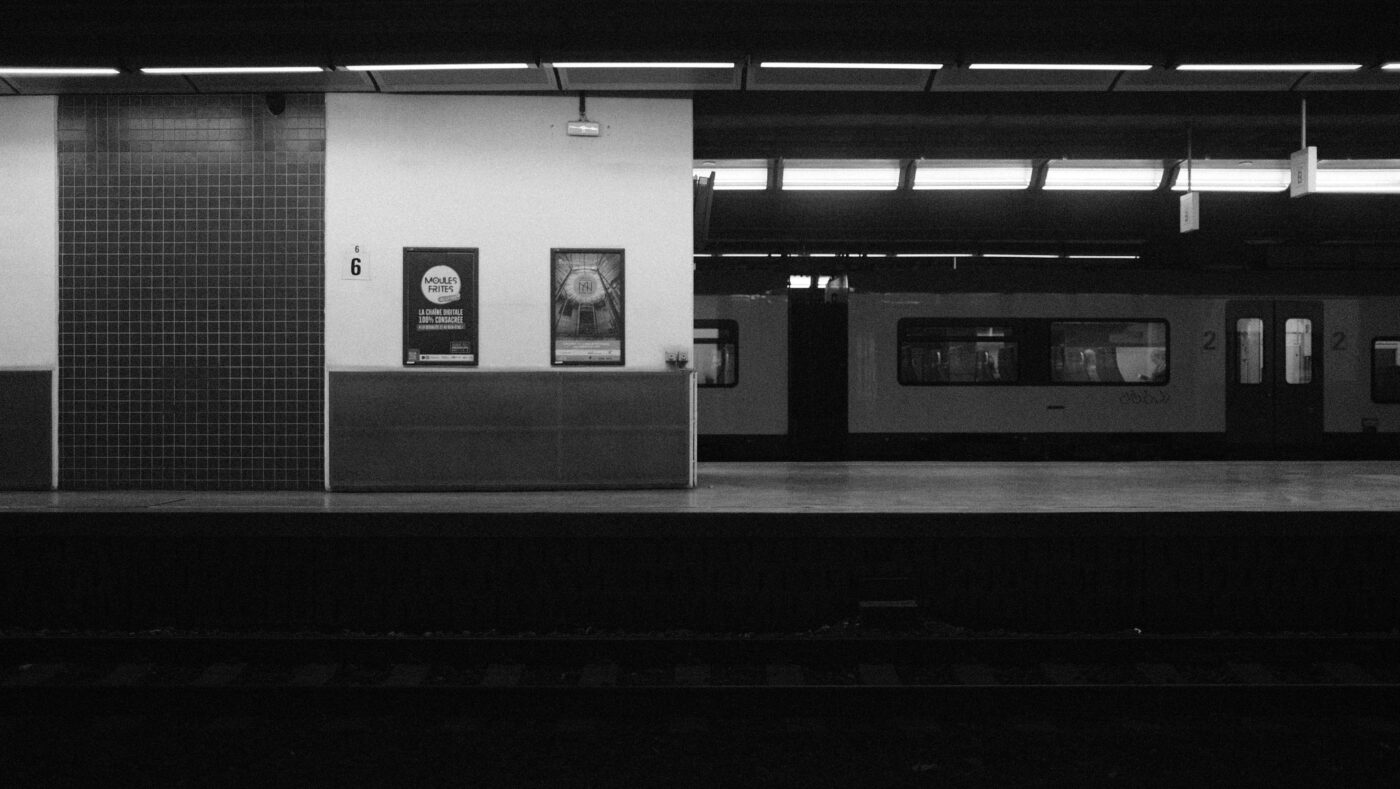
At Schuman station, I step off the train and search for a sign pointing me toward the right exit. That’s when I see a heap of blankets sprawled across the floor beneath the panel I was looking for, a head just barely visible. It’s the first time I notice someone sleeping rough here, but it won’t be the last. Each day of my field trip, I encounter this image in different constellations. I pause and wonder: What brought them here? Why are they braving the biting cold instead of staying in a shelter? The answer, I sense, can’t be simple.
Struck by the stark contrast between the polished glass offices aboveground and the harsh realities hidden in the metro station below, I continue on toward the Commission.
Free Movement in the EU
After passing a strict identity check, I finally enter the building and begin asking questions about the challenges EU citizens face when trying to exercise their right to free movement in various member states.
In principle, the rules are straightforward: any EU citizen can enter and live in another member state for up to three months with nothing more than a valid ID card or passport. Beyond that, they must either be employed, self-employed, studying, or, if not economically active, have sufficient financial means to avoid relying on public assistance (Article 7, EU Citizens’ Directive 2004/38). Permanent residence becomes possible after five years of continuous legal stay, regardless of employment status. Throughout this process, discrimination on the basis of nationality is explicitly prohibited. At the same time, however, Article 27 allows governments to restrict free movement on grounds of public policy, security, or health. These restrictions must be proportionate and cannot be used for purely economic ends.
On paper, then, EU citizens should enjoy equal treatment. In practice, as I was about to hear in the interviews, the picture is far more complicated.
The Faces behind Homelessness in Europe
Later that day, I am struck to learn that many of the people I had seen sleeping rough near the EU institutions are themselves EU free movers. This is surprising: in many member states, EU citizens make up only a small share of the total population. A high percentage of these free movers are the cosmopolitan elite who move abroad for a degree or a job for a few years to pep up their CV with the comfort of a separate legal regime. Yet, the other side of the coin, the homeless EU citizens, are clearly represented among those experiencing homelessness.
“We have a lot of homeless people at the moment. I think a few weeks ago it was around six to eight thousand homeless European migrants. Most of them came to the Netherlands for work,” explains a representative of the Association of Netherlands Municipalities (VNG) in an interview conducted in Amsterdam a few weeks later.
Among people experiencing homelessness, this group often faces the harshest conditions such as sleeping rough on the streets (FEANTSA 2020). My fieldwork showed that citizens from Central and Eastern European member states, and in particular Romani people, are disproportionately affected by these conditions.
Migration and Homelessness
Why are EU citizens among the significant groups of people experiencing homelessness in many European cities? Researchers have long identified migration as a structural factor for homelessness (Koen et al. 2024; Vonk 2017). At the broadest level, disadvantages on the labour and housing markets, combined with racism and social exclusion, play a central role (Edgar et al. 2004).
In the context of free movement, specific dynamics deepen these risks. Many Eastern European migrants come to countries like the Netherlands in search of better job opportunities. Often, they are promised stable work but end up facing short-term, informal, exploitative, or even non-existent employment (Kramer 2023). This problem is compounded by the fact that many arrive through work agencies, where housing is directly tied to their contracts. As a representative from the European Federation of National Organisations Working with the Homeless (FEANTSA) explains: “If you lose your job, you also lose the place you live.” With contracts often terminated at short notice, this link between employment and housing has led to a sharp rise in homelessness in recent years.
Access Barriers for Homeless EU Citizens
When EU citizens turn to local services for help, they frequently encounter barriers. Western European member states are reluctant to cover welfare costs for Eastern European migrant workers who become homeless (Pleace 2010). In the Netherlands, for instance, many municipalities had classified homeless EU citizens as niet-rechthebbenden (“non-rightholders”) for a long time. This label excluded them from accessing services such as overnight shelters if they cannot prove legal residence (Kramer 2024). But until now, even when eligibility exists on paper, access may still be denied in practice.
Research from Germany presents a similar picture. Even in “low-threshold facilities,” designed to be easily accessible and subject to fewer regulations, certain EU citizens are still excluded (Ahmad 2022). These individuals are often assumed to have the option to return to their country of origin, and are therefore deemed ineligible for emergency shelters (Engelmann 2023). In 2012, the Senate of Hamburg even planned to deport some Eastern European citizens and deny them access to winter emergency programs, as their high representation in these facilities was considered to disadvantage German citizens (Leuschner 2015).
These examples stand in stark contrast to the principle of equal treatment under EU law, which holds that citizens in comparable situations must not be treated differently. Yet in reality, economic conditionality undermines this principle: free movement is only guaranteed so long as individuals are not perceived as a burden on national welfare.
Local authorities often justify restrictive practices by pointing to limited resources and the complexity of EU regulations. But it is safe to say that the political sensitivity of free movement — especially stemming from countries considered “poorer” — also plays a role. As Vonk (2014) notes, fears of so-called “social tourism” can encourage municipalities to raise barriers against specific groups of migrants. A Dutch government official, speaking on condition of anonymity, confirmed that the system is “quite strictly implemented.”
Deportations in a Space without Borders?
Another factor shaping homelessness among EU citizens relates to border control — or rather, its absence. The Schengen regime has dismantled most internal checks, even if some of them are being reintroduced at this very moment. When someone loses their right of residence, authorities must weigh whether deportation is worthwhile. While many deportations do take place, the calculation is not straightforward: returning someone who can easily re-enter without detection may be a costly yet ineffective exercise. Therefore, as the Association of Flemish Cities and Municipalities in Brussels put it: “There is also a number of EU citizens homeless on the streets, really, because they didn’t go back.” And forcing them to do so might just not be worth it, even though some member states still do it.
European Attempts to Counter Homelessness
At the EU level, attempts have been made to address homelessness for citizens and non-citizens. The European Pillar of Social Rights (EPSR) recognises housing and assistance as basic rights (EC 2019). In the Lisbon Declaration of 2021, all member states committed to ending homelessness by 2030.
Yet, even as these promises accumulate, homelessness continues to rise: in Berlin, for example, numbers are expected to reach record highs by 2029 (The Berliner 2025). Implementation of respective policies remains the weak link. Without sufficient resources, administrative capacity, and above all sustained political will, ambitious goals often stay on paper rather than translating into meaningful change (Szeintuch 2024).
But How Can One Even Define Homelessness?
The difficulties go beyond practical and political inconsistencies. Researching and reading up on homelessness made it clear to me that one needs to take a step back and potentially attempt the impossible: defining what “homelessness” even means.
The category can include a wide range of situations, some highly visible, others largely hidden. And this broad conceptualisation is rarely reflected in national legislation (Hermans 2024). The term itself is thus not stable or autonomous; rather, it is often defined only as the absence of a home (Harper 2012). Yet what if a “home” is more than a “house”? It clearly extends beyond materiality and carries further dimensions, such as the possibility to experience bodily comfort or to be in a private environment (Somerville 2013).
However, most people still equate homelessness with its most visible expression: someone sleeping rough on the street, like the striking figure I first noticed in Brussels. In reality, rough sleeping is only the most extreme form, the “tip of the iceberg” (Hermans 2024).
In an attempt to capture this complexity, FEANTSA developed the European Typology on Homelessness and Housing Exclusion (ETHOS), which was adapted in 2007 to “Ethos Light”. It defines a home through three domains, including the spatial, meaning adequate accommodation under one’s exclusive control; the social, meaning privacy and space to maintain relationships; and the legal, meaning a recognised right to occupy the dwelling (Busch-Geertsema et al. 2014). It outlines six categories of homelessness:
1) people sleeping rough,
2) those in emergency accommodation,
3) people in shelters or temporary housing for the homeless,
4) those leaving institutions like hospitals or prisons without housing to return to,
5) individuals forced to live in non-conventional dwellings such as mobile homes, and
6) those temporarily staying with family or friends because they lack housing of their own.
How these definitions are applied, however, depends heavily on the member state. Some countries use strict criteria, others adopt broader ones. These choices directly affect how many people are officially recognised as homeless and therefore entitled to support. Ultimately, it is often left to local officials to judge the severity of a person’s housing precarity before granting access to services.
Furthermore, this definition still fails to capture the complex, multi-layered nature of what a “home” truly is. Can a house in which one feels unsafe due to domestic violence still be called a home? What about when someone no longer feels a sense of belonging in the place that once was their home, after a process of personal or emancipatory change? And where is a migrant’s home, who might simultaneously feel “at home” in multiple countries, while potentially still feeling like they don’t belong to any of them?
Reflecting on such questions reveals that “home” will always remain a “fleeting concept” (Farahani 2015). While this short blog post cannot explore these questions in depth, I want to conclude these fuzzy thoughts by highlighting Lancione’s (2023) perspective that addressing homelessness demands a fundamental rethinking of what we understand as “home.” Beyond structural policy reforms and social programs, it calls for a return to the basics, a rethinking of how we understand and produce knowledge about what “home” truly means.
Conclusion
That morning in Brussels, I couldn’t shake the image of someone sleeping under a panel in Schuman station, just steps away from the gleaming offices of the European institutions. It captured, in a single frame, the contradictions at the heart of the Union: a project built on promises of free movement and equality, yet unable to guarantee basic access for all who live within its borders, let alone for those arriving from beyond them – a glimpse into a wider European reality in which homelessness is tied to precarious labour mobility, restrictive welfare systems, and varying understandings of who can be considered “homeless.”
Authors Bio: Zoé Perko was a scientific researcher and PhD candidate in the subproject C01, “The Borders of the World II,” where she analysed tensions surrounding regional free movement regimes in Europe, Latin America, and West Africa. She wrote this blog post during her visiting fellowship at the Department of Transnational Legal Studies at Vrije Universiteit Amsterdam in 2025.
Photo credits
Foto von J MAD (https://www.pexels.com/de-de/foto/schwarz-und-weiss-schwarzweiss-zug-station-21550330/)
Sources
Baptista, I., & Marlier, E. (2019). Fighting homelessness and housing exclusion in Europe: A study of national policies. Publications Office. https://data.europa.eu/doi/10.2767/624509
Busch-Geertsema, V., Benjaminsen, L., Filipovič Hrast, M., & Pleace, N. (2014). Extent and profile of homelessness in European member states: A statistical update. European Observatory on Homelessness. https://www.feantsaresearch.org/download/feantsa-studies_04-web24451152053828533981.pdf
Engelmann, C. (2023). Du kommst hier nicht rein – Vom Zugang zu Notunterkünften für wohnungslose EU-Bürgerinnen. Archiv für Wissenschaft und Praxis der sozialen Arbeit, 54(2), 48–55.
FEANTSA (2020). Intra-EU migrants experiencing homelessness in Brussels: Analysis of field data gathered by DIOGENES street outreach workers (M. Striano, Author). Brussels: FEANTSA. https://www.feantsa.org/public/user/Resources/reports/BRU_3690_RapportMigrants_EN_1_BD.pdf
Farahani, F. (2015). Home and homelessness and everything in between: A route from one uncomfortable zone to another. European Journal of Women’s Studies, 22(2), 241–247. https://doi.org/10.1177/1350506815576148
Harper, E. (2012). Homelessness and violence: Freud, Fanon and Foucault and the shadow of the Afrikan sex worker (Doctoral dissertation, University of the Western Cape). University of the Western Cape Repository. https://core.ac.uk/reader/58915100
Haj Ahmad, M.-T. (2022). Von Ein- und Ausschlüssen in Europa: Eine ethnographische Studie zu EU-Migration und Wohnungslosigkeit in Deutschland. Münster: Verlag Westfälisches Dampfboot. https://doi.org/10.56715/398634130
Hermans, K., Dyb, E., Knutagård, M., Novak-Zezula, S., & Trummer, U. (2020). Migration and homelessness: Measuring the intersections. European Journal of Homelessness, 14(3), 19-41. https://www.feantsaresearch.org/public/user/Observatory/2021/EJH_14-3/EJH_14-3_A1_web2.pdf
Hermans, K. (2024). Toward a harmonised homelessness data collection and monitoring strategy at the EU-level. European Journal of Homelessness, 18(1), 189-217. https://www.feantsaresearch.org/public/user/Observatory/2024/EJH_18-1_A08.pdf
Kramer, D. (2023). Homelessness and EU citizenship in a borderless Europe. Europe Now: A Journal of Research & Art. https://www.europenowjournal.org/2023/07/06/homelessness-and-eu-citizenship-in-a-borderless-europe/
Kramer, D. (2024). Mobilizing the rights of homeless EU citizens in the Netherlands. German Law Journal, 25(6), 910–918.
Lancione, M. (n.d.). For a liberatory politics of home. Duke University Press. https://www.dukeupress.edu/for-a-liberatory-politics-of-home
Leuschner, V. (2016). Wohnungslose- und obdachlose Unionsbürger aus Osteuropa in Deutschland. In Klik e.V. (Ed.), Ich bin hier und ich lebe: Porträts wohnungsloser junger Menschen in Berlin (pp. 22–28). Klik e.V.
Pleace, N. (2010). Immigration and homelessness. Homelessness Research in Europe. 143-162. https://www.feantsaresearch.org/download/ch078336636212332857192.pdf
Somerville, P. (2013). Understanding homelessness. Housing, Theory and Society, 30(4), 384–415. https://doi.org/10.1080/14036096.2012.756096
Szeintuch, S. (2024). Homelessness strategies in Europe: A review of the literature. European Journal of Homelessness, 18(2), 235-262. https://www.feantsaresearch.org/public/user/Observatory/2024/EJH-18-2/EJH_18-2_RN04_web.pdf
The Berliner. (2025, July 29). Berlin forecasts significant increase in homelessness by 2029. The Berliner. Retrieved August 6, 2025, from https://www.the-berliner.com/english-news-berlin/berlin-forecasts-significant-increase-in-homelessness-by-2029/ Vonk, G. J. (2017). Homelessness as a challenge for the European Union. University of Groningen Faculty of Law Research Paper No. 19/2017. https://ssrn.com/abstract=3091546